Lets Start By Going Over 3 Basics About Live-in Care

What services do live-ins offer?

Live-in caregivers provide a wide range of non-medical services that help older adults remain safe, comfortable, and independent in their own homes. Because they live on-site, they’re available throughout the day and on-call overnight, offering dependable care with fewer disruptions than hourly or rotating shift models.

Below are the most common services offered by live-in caregivers:

  1. Personal Care (ADLs)
    These are hands-on services that assist with essential daily activities:
  • Bathing and hygiene assistance
  • Dressing and grooming
  • Toileting and incontinence care
  • Help with walking, transfers, or mobility
  • Feeding assistance
  1. Memory Care Support
    For those with Alzheimer’s or dementia, caregivers offer structure and safety:
  • Gentle reminders and redirection
  • Supervision to prevent wandering
  • Assistance with daily routines
  • Familiar companionship to reduce confusion or anxiety
  1. Companionship & Emotional Support
    Live-ins often provide daily connection and comfort:
  • Engaging in conversation and shared activities
  • Reading, puzzles, games, or hobbies
  • Walks or outings
  • Technology help (video calls, TV, apps, etc.)
  1. Household Support (IADLs)
    Caregivers help maintain a clean, safe, and organized home:
  • Light housekeeping (laundry, dishes, vacuuming, making beds)
  • Meal planning and cooking
  • Grocery shopping and errands
  • Medication reminders (non-medical)
  • Help organizing calendars, mail, or daily tasks
  1. Transportation & Errands (if caregiver drives)
  • Driving to medical appointments or therapy
  • Grocery shopping or pharmacy runs
  • Social outings, errands, or family visits
  1. Overnight On-Call Availability
  • Assistance with nighttime bathroom visits
  • Responding to emergencies or confusion
  • Offering reassurance during the night
  1. Pet Care Support (when requested)
  • Feeding and walking pets
  • Coordinating vet visits
  • Providing companionship for pets and their owners
  1. Travel & Seasonal Support
  • Willingness to travel with care recipient
  • Support for “snowbird” clients (seasonal relocations)
  • Temporary relocation for family visits or events

To learn more about what a live-in caregiver can do for your specific situation, contact Grandma Joan for a free consultation.

 

What's the difference between 24-hr care and live-in?

There are some very big differences between 24/7 hourly home care and live-in care. Both serve to keep a care recipient safe at home when they can’t do so by themselves anymore.

Let’s start with live-in care, which is what Grandma Joan helps families with.

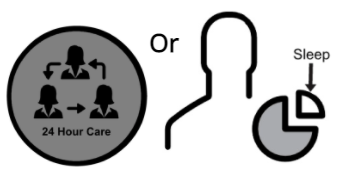
A single caregiver will move into a spare bedroom in the care recipient’s home and attend to the care recipient as needed all day long, then sleepover “just in case” help is needed overnight. Its the same person all month long. Not multiple people coming and going all day and night. Best for continuity of care.

A live-in usually works intermittently throughout the day, as needed, but then gets an unpaid* sleep shift of 8 hrs off each night. For these 8 hrs, they are on-call (except CA). They will always get up in case of an emergency or to help them to the commode, but otherwise, they need to be left alone to sleep and recharge. If they are called to work during their sleep shift, they need to sign in/out for that additional time worked.

Most 7 day live-in cases are done with the live-in covering 6 days / 7 nights and the family or a separate home care agency providing coverage for the live-ins weekly or monthly time off. 

Some live-ins prefer doing 7 day, with no or little unpaid time off, and then take a monthly break of a 2-3 day weekend off. Others prefer to have a weekly shift off, say 8hr-24hrs, but not require any monthly time off.  

In our experience, both groups last longer if they are given the oppertunity to take a week off every 6 months or so. 

24 hr home care, on the other hand, is for care recipients that need physical help or monitoring regularly during both days and during overnights. This is commonly used when someone needs to be watched most of the time for safety reasons.

Usually, 2-3 different caregivers come to the home each day and work 8-12 hour shifts in the home. To avoid overtime, agencies typically schedule 4-8 different people each month to fill all the shifts. It can be challenging to manage, as people call in sick or are running late and people are always coming and going. This type of care used to be only used in very high-needs cases because of the challenge of making it work and the crushing cost to the family. Most agencies charge a min of $792 per day and $24,090 per month for the service. CA averages $25k-$35k per month.

Who does live-in care?

Generally speaking, the majority of professional live-in caregivers are foreign born, American women from 30-60 yrs old. There are plenty of exceptions of course, and about 3% are men.

In our experience, most of the American born caregivers prefer hourly shifts instead of live-in.

If you do the math, a live in is at work daily during three 8 hr shifts. That puts them at work the equivalent of 3 months for every one month that every one else works normal 8 hr workdays. They are at work an entire years worth of hours in just 4 months. Of course they are allowed to sleep on one of those shifts, but at work, not at home. Wow!

It’s a huge sacrifice to their own life, family, and friends that they make to move into and live with “strangers” who need help. Most people born in the US have too many other oppertunities available to make such a great sacrifice.

On the other side we have immigrants who have become Americans but are from countries where elders are still held in very high regards and caring for them is a good position with purpose and meaning. The pay is low per hour, but overall the monthly amount is substantial for them to bank or use to support their family in their absence. They are fluent in English, and most have been here for years taking care of American seniors at home.

That being said, there are people who were born in the US that find that they love the position too, but they are less common in most parts of the country, and generally prefer 8-12 hour shifts instead of live-in positions.


Live-in Care Basics

*To learn about the federal law that governs domestic live-ins, and the pertinent requirements, visit the US Dept of Labor website using this link:
https://www.dol.gov/whd/homecare/faq.htm#livein

Now lets dig a bit deeper and answer some specific
questions about live-in care and Grandma Joan.

Using Grandma Joan's model, live-in home care is a full-time caregiving arrangement where a professional caregiver moves into the care recipient’s home to provide ongoing, non-medical support. This caregiver typically lives in a furnished guestroom and is available throughout the day to assist with ADLs (Activities of Daily Living) such as bathing, dressing, grooming, toileting, ambulation, and eating, as well as memory care, companionship, light housekeeping, meal preparation, errands, and more.

Unlike hourly or rotating shift-based care—which can involve 4–7 different caregivers each week—live-in care offers continuity, reliability, and peace of mind by having one consistent caregiver. The caregiver is “on-call” overnight in case of emergencies but is given a minimum of 8 hours off each night to sleep, and typically has a weekly break (often covered by family or a local home care agency).

At Grandma Joan, we help families find, screen, and hire top-tier live-in caregivers as household employees. Each match is based on a client-specific nationwide search to ensure the right personality, skill set, and availability. We assist through the hiring process, then step back—so families maintain full control and flexibility without ongoing home care agency overhead costs.

Live-in care can be a great solution for families who want to keep a loved one at home and need consistent, full-time support without the disruptions that come with rotating hourly shifts.

It may be a good fit if:

  • Your loved one needs daily help with memory care or Activities of Daily Living (ADLs), such as bathing, dressing, or walking.
  • They can safely be left alone for short periods during the day, such as 30–60 minutes.
  • They generally sleep through the night or only need occasional overnight assistance.
  • You have a furnished guestroom available for the caregiver.
  • You're looking for a more affordable and stable alternative to 24-hour agency care.
  • You value having one consistent caregiver to build trust and continuity.
  • You’re open to hiring a household employee, with support and guidance from professionals such as a live-in care advisor from Grandma Joan, a household payroll specialist, a local care manager, and an elder law attorney.

Live-in care may not be appropriate if your loved one requires around-the-clock supervision, has significant medical needs, or is awake and in need of assistance several times each night.

We’re happy to discuss your situation in more detail. A free consultation can help determine whether live-in care is a strong fit for your family's needs and lifestyle.

Live-in care is ideal for individuals who may require full-time support with daily activities but do not need constant supervision or complex medical care.

Common appropriate care needs include:

  • Memory care (Alzheimer’s, dementia, or cognitive decline)
  • Assistance with ADLs, including bathing, dressing, toileting, grooming, eating, and ambulation
  • Companionship and safety supervision
  • Mobility support and fall prevention
  • Meal preparation and light housekeeping
  • Transportation to appointments, errands, or social outings
  • Pet care and household routine help

Live-in care is best suited for:

  • Care-recipients who can be safely left alone for short periods (e.g., 30–60 minutes while the caregiver is in another room)
  • Individuals who sleep through most of the night or only need minimal overnight assistance (1-2x a night)
  • Families who can offer basic oversight or coordinate respite help when needed through their local home care agency

This model is not appropriate for clients who:

  • Require hands-on help throughout the night, every night
  • Need 24/7 monitoring due to wandering, aggressive behaviors, or high-acuity medical needs

If the care recipient's needs align with this profile, live-in care can be a stable, high-quality, and cost-effective alternative to facility or shift-based care.

To hire a live-in caregiver, the home should have a furnished, private guestroom where the caregiver can sleep and store their belongings. This room should include a comfortable bed, basic furniture (like a dresser and nightstand), and access to a bathroom.

Because live-in caregivers are working long days and staying overnight, a respectful and private living space is essential. They are not expected to share a room with the care recipient or sleep on temporary arrangements like couches or air mattresses.

In most cases, caregivers are also given:

  • 8 hours off to sleep each night (they remain “on-call” for emergencies)
  • Scheduled breaks or time off each week (typically one full day or 12+ hours, covered by family or a local home care agency)
  • Kitchen access and either meals or groceries to prepare meals for the care recipient and themselves.

If the care recipient is open to sharing their home and has a suitable space, live-in care can be a great long-term solution that balances comfort, dignity, and support for both parties.

When a loved one begins to need daily help, most families start by piecing together care informally—relying on a mix of family, friends, and neighbors. It’s understandable. These are people who care deeply and want to help. But they're rarely trained in caregiving, and over time, this approach becomes unsustainable—both for the care recipient and for those trying to provide support.

As care needs escalate—especially for those with memory loss or mobility challenges—the physical, emotional, and logistical strain on informal caregivers grows. People get overwhelmed. Coverage gaps become more frequent. And the quality of care suffers.

The next step many families consider is hiring a local home care agency. While agencies provide trained caregivers and can fill in coverage more reliably, they come with their own challenges. Agency-based care often involves 4 to 7 different caregivers rotating through the home each week, which can be deeply unsettling for someone with memory issues or a strong need for routine. And the cost? It can exceed $25,000 per month for 24/7 care—a price point that’s simply out of reach for most households.

Private-hire live-in care offers a better alternative.

Instead of rotating strangers or burning out loved ones, one carefully selected caregiver moves into the home and becomes a stable, trusted presence. They assist with personal care, memory support, meals, companionship, and are available overnight in case of emergencies. Families hire the caregiver directly—as a household employee—with help from Grandma Joan for recruiting, screening, background checks, and setting up payroll.

There are no ongoing agency fees, and live-in caregivers often provide broader support than agency workers—like driving, pet care, or even traveling with the care recipient.

The Benefits of Private-Hire Live-In Care:

  • Consistency: One dedicated caregiver, not a revolving door.

  • Affordability: Often 30%–50% less than full-time agency care.

  • Peace of Mind: Trained, experienced help is always present.

  • Nationwide Talent Pool: We match families with the best caregivers in the country—not just those nearby.

  • Better for Everyone: Reduces burnout for families and provides compassionate, professional support to the care recipient.

This model is especially well-suited for those needing full-time memory care or daily assistance with activities of daily living (ADLs)—and who want to stay comfortably in their home, without the chaos of constant staffing changes or the stress of cobbling together care from untrained helpers.

ven live-in caregivers need rest and recovery time. Fortunately, the private-hire model is designed with flexibility to support both the caregiver’s well-being and the care recipient’s needs.

Most live-in care arrangements include:

  • A scheduled day off each week (or 12+ hours of respite if working 7 days)
  • Breaks during the day, especially when the care recipient is resting or not in need of direct support
  • Occasional extended time off, such as a few days every few months or a full week every 6–12 months, which families can plan for in advance

If the caregiver becomes ill or needs unexpected time away:

  • Families can coordinate temporary coverage through a local home care agency, an adult day center, or step in themselves if possible.
  • Grandma Joan clients also have the option to request a replacement caregiver search, if longer-term coverage is needed or if a permanent change becomes necessary.

While no care setup is entirely interruption-proof, having just one core caregiver makes it much easier to plan and communicate around schedule changes—compared to managing rotating shifts or a revolving door of staff.

Yes, live-in caregivers can assist with medications, but their role is limited to non-medical support.  They shouldn't administer injections, make dosing decisions, or manage prescriptions on their own.

They can:

  • Provide reminders to take medications on time
  • Hand medications to the care recipient
  • Track doses or monitor whether medications have been taken
  • Report concerns or changes in behavior to the family

In most live-in care arrangements through Grandma Joan, caregivers support medication routines as part of a broader daily care plan that includes ADLs, companionship, meals, and more—providing peace of mind without overstepping clinical boundaries.

Yes, live-in caregivers typically assist with light household chores as part of their day-to-day support. This often includes:

  • Laundry
  • Light cleaning (e.g., tidying, dishes, vacuuming common areas)
  • Meal preparation and cleanup
  • Errands and grocery shopping
  • Pet care (feeding, walking, basic supervision)

Their primary role is to support the care recipient’s well-being, so chores are usually focused on maintaining a clean, safe, and comfortable environment for that person. However, live-in caregivers are not housekeepers, and their duties usually stay focused on tasks related to care. Families who need heavier or whole-home cleaning may still want to hire separate housekeeping support as needed.

Yes, many live-in caregivers can drive the care recipient, but it depends on the individual caregiver’s qualifications and the family's preferences.

At Grandma Joan, the majority of caregivers we recruit:

  • Have a valid driver’s license
  • Have years of experience driving clients safely
  • Are comfortable driving either the client’s vehicle or their own, depending on the arrangement

Driving tasks may include:

  • Medical appointments
  • Grocery shopping or errands
  • Social outings or religious services
  • General transportation to keep the care recipient active and engaged

Before hiring, families can specify if they want a caregiver who drives. We’ll include that in the nationwide search. If using the caregiver’s personal car, families reimburse for mileage at the IRS declared rate; if using the client’s car, it should be insured and in safe condition.

It's important to note that only a small percentage of live-ins will bring their car with them to work. Why pay care insurance and a car payment on a car when you live at work! Most leave it at home for their families to use, and either drive the clients car, or use a Uber for their day off.

Ultimately, driving is a common and customizable part of many live-in care arrangements.

No you are not required to BUT, most families either provide meals for the live-in caregiver or give a grocery allowance so the caregiver can prepare their own food.

Since the caregiver is living in the home and working long hours, it’s standard to include meals as part of their compensation package. This doesn't mean cooking every meal for them—but rather allowing access to the kitchen, sharing family meals if appropriate, or covering basic groceries.

Common arrangements include:

  • Stocking the fridge/pantry with shared or designated food items
  • Providing a weekly grocery stipend
  • Including the caregiver in family meals when practical

During the hiring process, Grandma Joan helps you set clear expectations around food, dietary needs, and kitchen use—so both sides feel comfortable.

No, live-in care is not covered by Medicare or standard health insurance plans.

Because Grandma Joan’s live-in caregivers provide non-medical, custodial care—such as help with bathing, dressing, memory care, meals, and companionship—this type of support falls outside the scope of what Medicare or traditional health insurance pays for.

Most families pay for live-in care privately using personal savings, retirement income, or help from family members. In some cases, the cost may be partially offset by:

  • Long-term care insurance, if the policy includes in-home care and the caregiver meets the policy’s criteria
  • Veterans benefits, like Aid and Attendance for qualifying individuals
  • Tax deductions for household employment and elder care expenses (consult your tax advisor)

While not insurance-covered, direct-hire live-in care can offer significant cost savings compared to 24/7 agency care—making it a practical long-term option for families who want to keep their loved one at home.

Grandma Joan FAQs

Grandma Joan provides live-in care consulting and recruiting services to help families find and hire professional, long-term live-in caregivers as household employees.

We do not provide the caregiving directly. Instead, we offer a high-touch service that includes:

  • A free consultation and cost estimate based on your family’s needs

  • A nationwide, client-specific caregiver search (not limited by local supply)

  • Thorough screening of candidates, including interviews, reference checks, a 15-year background check, and a 10-panel drug test

  • Arranging Zoom or in-person interviews with top candidates

  • Custom-tailored employment agreement templates

  • Referrals to trusted partners for household payroll and workers' comp setup

  • Ongoing access to us for guidance, replacement searches, and support

We specialize in staffing full-time, long-term live-in caregivers, not hourly, respite, or temporary staffing. Once a caregiver is hired, the family becomes the employer—giving them full control, continuity, and significant savings over using a caregiver registry or home care agency to staff the same coverage hours.

Our services are available throughout the continental U.S., except in states where restrictions apply (currently IL, NJ, NV, OR, UT, and WV).

Grandma Joan offers a unique, cost-effective, and personalized alternative to traditional home care agencies and caregiver registries. Our focus is exclusively on premium live-in caregiver recruiting for families who need consistent, full-time care at home — without the high overhead or constant turnover of other models.

Here’s why families choose us:

1. No Endless "Admin Fees" — Ever

Caregiver registries typically charge an “admin” or “service” fee equal to 20% of what you’re paying your live-in caregiver, for every day that care is provided. This fee continues for as long as you use the caregiver — often costing families $20,000 to $30,000 per year, year after year.

Home care agencies take a different approach, but the result is the same: their admin fee is built into their hourly rate, typically making up 50% or more of what you’re paying. And just like registries, it’s charged for every hour of care — with no end date. That’s one of the biggest reasons why hourly care through an agency is far more expensive than Grandma Joan’s direct-hire model.

With Grandma Joan, there are no ongoing admin fees. You pay a flat recruiter fee once, or opt for our installment plan, capped at 18 months. After that, you owe nothing further, no matter how long your caregiver stays.

2. Consistency, Not a Rotating Door
Agencies often cycle through 4–7 different caregivers per month, especially on 24-hour cases, which can be distressing for memory care clients.
We help you hire one dedicated live-in caregiver, building trust and long-term rapport with your loved one.

3. Nationwide Talent Access
Registries and agencies both rely on whoever is locally available. We conduct nationwide headhunting, presenting you with top-tier, professional live-ins from across the country — not just your zip code.

4. Direct Hire = Total Control
You become the employer, meaning:
• You set the caregiver’s schedule
• You tailor their duties
• You make changes without third-party approval
This flexibility leads to better, more personalized care — and peace of mind.

5. Rigorously Screened Candidates
We conduct:
• Multi-level background checks (county, state, federal)
• Social security trace
• 10-panel drug test
• Four interviews and employer reference checks
So you can hire with confidence.

6. Replacement Guarantee
We offer complimentary or low-cost replacements if your caregiver isn’t the right fit — something most agencies and registries don’t do without restarting the entire fee structure.

In short:
Grandma Joan gives families a higher quality, more affordable, and more stable live-in care solution — with no endless monthly fees. It’s an investment in long-term peace of mind, not a bill that never ends.

Using our model, the cost to hire a professional live-in caregiver typically starts at $11,000+ per month for a care recipient who lives alone, and $13,000+ for a care recipient who lives with someone else. Costs will vary depending on your state's labor laws, the care needs, the weekly schedule chosen, and the caregiver’s experience.

This monthly cost includes:

  • The caregiver’s wages
  • Payroll taxes
  • Workers’ compensation insurance
  • Payroll and HR service fees
  • Our recruiter fee when paid in installments. (Clients may opt to pay our fee in a lump sum for significant savings)

Rates are usually higher in areas like California and New York, and for couples or more complex care needs.

Even with the payroll costs, our recruiter fee, and incidentals, private live-in care is often half the cost of 24-hour agency care, and offers greater consistency and peace of mind.

Grandma Joan conducts a thorough screening process to ensure they meet the highest standards for live-in care.

This screening includes:

  • Preliminary background check 
  • Reference verification from previous household employers or care-related supervisors

  • Verification of training credentials (including CNA/HHA etc..)
  • Four interviews (two with us, two with the family/care-recipient)

  • Social security trace to verify identity and residence history

  • 15-year criminal background checks, including:

    • County-level search (all counties they've lived in)

    • Nationwide database check (All States)

    • Federal records check

  • 10-panel drug test, administered at a nearby lab

This screening ensures that each caregiver placed through Grandma Joan has been professionally vetted, legally checked, and personally recommended based on real-world caregiving experience.

The typical hiring process takes 3 to 4 weeks from the time you sign on with Grandma Joan to the day your live-in caregiver moves in.

This timeline includes:

  • A personalized consultation to understand your needs
  • A nationwide search for top caregiver candidates
  • Screening, interviews, and reference checks
  • Coordination of caregiver introductions and interviews
  • Final selection and preparation for the start date

If you're in a hurry, we also offer an expedited search option, which can shorten the process in many cases.

We work quickly—but never cut corners—so you can feel confident that your caregiver has been thoroughly vetted and thoughtfully matched to your family.

Once a caregiver is hired through Grandma Joan’s recruiting service, the family (household employer) manages the caregiver directly. This includes setting the schedule, outlining responsibilities, and overseeing day-to-day performance. Grandma Joan does not employ, supervise, or manage caregivers after placement.

Benefits:

  • More Control: Families can tailor the caregiver’s duties, schedule, and routines to fit their specific needs and preferences.

  • Stronger Relationships: Direct employment fosters a more personal and trusting bond between the caregiver and care recipient.

  • Cost Savings: Without agency overhead or recurring management fees, families typically save tens of thousands per year.

  • Flexibility: Adjust care arrangements or job duties at any time without needing third-party approval.

  • Continuity of Care: A consistent caregiver means fewer disruptions, which is especially valuable for those with memory care needs.

We’re always here to support you with guidance, resources, or referrals if questions come up after your caregiver is hired.

We understand that not every match is perfect. If the caregiver you hire through Grandma Joan isn’t the right fit or their situation changes, we’re here to help.

We offer replacement support to assist you in finding a new live-in if needed. Whether the caregiver leaves or you decide to make a change, our team will guide you through the next steps and help you get back on track quickly.  In all cases, we offer a complimentary replacement search, FOR ANY REASON, within 120 days of the live-in starting, and for some long-term cases, replacement searches for up to 18 months for a nominal fee.

Our goal is to make the process as smooth and flexible as possible—so you and your family feel supported every step of the way.

Grandma Joan has earned the reputation as The Live-in Experts because live-in care isn’t just something we offer — it’s all we do, and we've done it exceptionally well since 2010. Senior care professionals across the country trust us because of our proven track record, industry-specific expertise, and commitment to quality.

Here’s why we’re the go-to authority for live-in staffing:

1. 100% Focused on Live-in Care
Unlike general home care agencies or registries, we specialize exclusively in recruiting and placing full-time, private-hire live-in caregivers. This singular focus has allowed us to master every nuance of the model — from compliance and screening to client education and ongoing support.

2. Nationwide Headhunting — Not Local Limitations
We recruit nationally, allowing us to present clients with the best live-in caregivers from across the country — not just whoever is available locally. This results in higher quality hires and better long-term matches.

3. Trusted by the Professionals Who Know Best
Eldercare attorneys, geriatric care managers, hospice teams, and senior advisors routinely refer families to us. We’ve helped staff over $25 million in live-in care payroll and have been awarded for client satisfaction and industry partnership.

4. Industry-Leading Screening Standards
We conduct 4 rounds of interviews, verify references from past household employers, perform a 15-year multi-jurisdiction background check, a 10-panel drug test, and social security trace — far exceeding typical industry standards.

5. Education and Consulting That Empowers Families
We don’t just send resumes. We guide families through the financial, and logistical process of becoming household employers. Our consulting approach gives families the tools and confidence to manage care successfully at home.

6. Award-Winning Service, Backed by Experience
We’ve received national recognition, hold an A+ BBB rating, and were honored by the Aging Life Care Association with the “Outstanding Corporate Partner Award.” Our team has nearly 15 years of specialized experience supporting thousands of families nationwide.


In short, Grandma Joan is considered The Live-in Experts because we are the most experienced, most trusted, and most dedicated recruiting partner in the live-in care space — and we deliver results that make a real difference in the lives of seniors and their families.

During your call, we will:
Conduct an Initial Assessment: Our primary goal is to understand your specific needs and preferences. This will include a discussion about the care recipient's daily routine, and any specific assistance they require.

Review Your Options: We will discuss some of the different ways that live-in schedules can work to best meet your specific needs, goals, and budget.

● Discuss Caregiver Screening/Matching: We believe in the importance of a good match between caregiver and client. We’ll talk about your preferences regarding the caregiver's skills, experience, and personality.
Answer Your Questions: We encourage you to prepare any questions or concerns you may have. This meeting is as much about providing you with information as it is about us understanding your situation.
Discuss Next Steps and Timeline.
Feel free to invite any family members or other responsible parties to join the consultation, if you feel their input will be beneficial.  Just share the Zoom link that you are sent after booking a day and time.  Book a free consultation here.
We are committed to providing you with the best live-in care options possible. Thank you for considering our consulting and recruiting service for finding the best candidates on the market for you to consider to hire. We look forward to meeting you and are here to assist you in any way we can.
Live-in Care Basics

Want to know more?

See if live-in care is a viable option for your location and situation. We are here to help, and LOVE what we do.